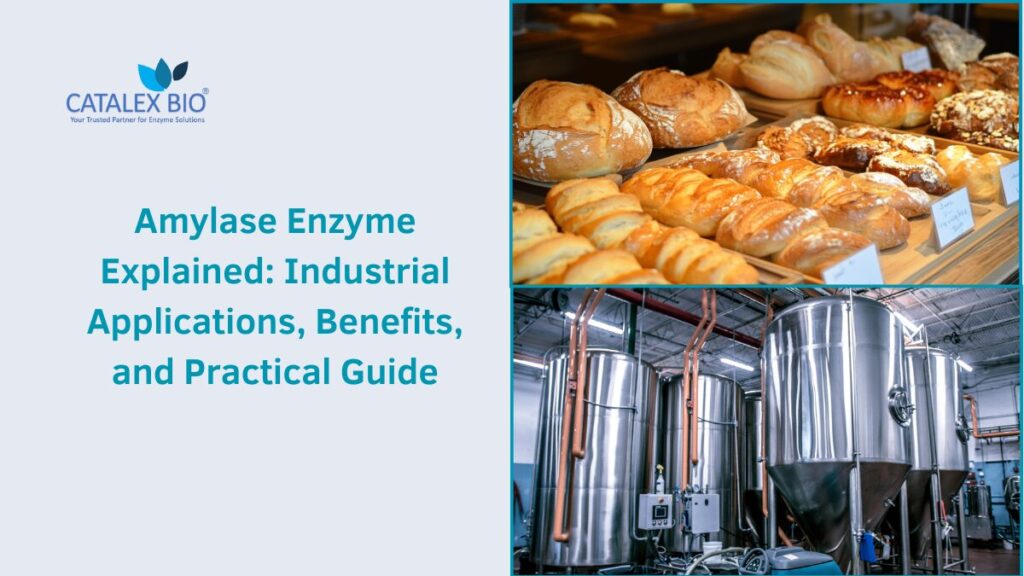

1. Introduction: Baking in India Is Familiar — Yet Technically Distinct
Bread, biscuits, cakes, crackers, pav, rotis, and wraps are produced across the world using broadly similar ingredients—flour, water, yeast, sugar, and fat. On the surface, baking looks universal.
However, when global formulations, bakery improvers, or enzyme systems are used directly in India, results often differ from what bakers see in Europe, Australia, or North America.
Indian bakers—whether running large industrial bread plants, regional biscuit factories, or chapati and flatbread lines—experience this difference every day in very practical ways:
- Dough behaves differently across seasons
- Flour performance changes even when specifications remain the same
- Fermentation becomes harder to control during summer
- Finished products lose softness or freshness faster during distribution
These are not one-off production issues. They are structural realities of baking in India.
Understanding these realities is essential when choosing process aids—especially bakery enzymes, which have become key tools for maintaining consistency, stability, and commercial performance under Indian conditions.
Catalex Bio, an Indian manufacturer and supplier of bakery enzymes, works closely with commercial and industrial bakeries to address these challenges through enzyme solutions designed specifically for Indian raw materials, climate, and production setups. Our bakery enzyme portfolio includes Alpha-Amylase, Maltogenic Amylase, Xylanase, Glucose Oxidase, Hemicellulase, Protease, Lipase, Glucoamylase, and customized multi-enzyme blends.
This article explains why baking in India needs a different technical approach—and how enzymes support that process
2. Why Global Baking Assumptions Often Fall Short in India
Most global bakery formulations and enzyme systems are developed with certain assumptions in mind, such as:
- Consistent wheat quality with predictable gluten behavior
- Controlled factory temperatures
- Short and efficient distribution systems
- Fully automated and repeatable production lines
Indian bakery operations rarely meet all these conditions at the same time.
Instead, they work within a combination of variable raw materials, high temperature and humidity, mixed production setups, long distribution chains, and strong cost pressure. These factors influence each other and directly affect dough handling, fermentation control, and finished product quality.
Because of this, enzyme selection in India is not just an ingredient choice. It is a process-alignment decision, closely linked to how the bakery actually operates.
Typical Assumptions vs Indian Baking Reality
| Parameter | Global Assumption | Indian Reality |
|---|---|---|
| Wheat quality | Standardized | Regionally sourced, variable |
| Ambient temperature | 18–25°C | Often 30–40°C |
| Humidity | Controlled | High and fluctuating |
| Production setup | Fully automated | Manual to industrial mix |
| Distribution | Short, cold-chain | Long, ambient transport |
3. Raw Material Variability: The Base Challenge in Indian Baking
Wheat and Flour: Same Numbers, Different Performance
Wheat quality is one of the biggest variables in Indian baking. Flour mills usually source wheat from multiple regions such as Punjab, Madhya Pradesh, Uttar Pradesh, and Rajasthan, and sometimes blend domestic wheat with imported wheat.
Even when flour specifications show acceptable protein and ash values, these numbers do not fully reflect how the flour will behave in actual production. Important functional differences include:
- Gluten strength versus extensibility
- Level of damaged starch
- Natural enzyme activity already present in the flour
As a result, two flours with similar protein levels can perform very differently during mixing, fermentation, and baking.
What Bakers See on the Shop Floor
This variability typically shows up as:
- Dough that feels strong one week and weak the next
- Changes in water absorption
- Inconsistent gas retention during fermentation
- Variations in crumb structure and volume
For high-throughput bakeries, these changes make it difficult to maintain stable production without frequent adjustments.
Enzymes as Variability Stabilizers
In India, enzymes are not used simply to “upgrade” flour. They are used to stabilize performance.
When selected and dosed correctly, bakery enzymes help:
- Control starch breakdown for predictable fermentation
- Improve dough tolerance even when gluten quality varies
- Reduce sensitivity to flour-to-flour variation
This practical role—process stabilization and not only final product enhancement—defines how enzymes are used in Indian bakeries today.
4. Climate Conditions: Heat and Humidity as Daily Process Challenges
Effect of High Temperature
Most Indian bakeries operate at high ambient temperatures, especially in summer. Higher temperatures speed up:
- Yeast activity
- Enzyme reactions
- Dough softening
Processes that remain stable in cooler climates can become difficult to control in India, particularly when proofing and fermentation conditions are not fully controlled.
Effect of High Humidity
High humidity adds further challenges:
- Flour moisture content changes
- Dough becomes stickier and harder to handle
- Finished products face higher risk of spoilage and shorter shelf life
Products such as bread, cakes, wraps, and rotis are especially sensitive to these conditions.
Enzymes Designed for Indian Climate
Enzyme systems used in India must work reliably under:
- Faster reaction conditions
- Wider temperature variation
- Less-than-perfect process control
Rather than high-activity, generic solutions, Indian bakeries benefit more from balanced, application-specific enzyme systems that support the process without making the dough unstable.
5. Process Diversity: From Manual Units to Industrial Plants
A Wide Range of Production Setups
Indian baking includes:
- Manual and semi-automatic bakeries
- Medium-scale regional plants
- Large industrial factories supplying national brands
Even within the same company, equipment and process control levels may differ from plant to plant.
This means dough systems must be robust, not overly sensitive.
Why Dough Tolerance Matters
In less automated setups, dough must tolerate:
- Variation in mixing time and intensity
- Handling delays
- Inconsistent resting and proofing conditions
Enzyme systems designed only for tightly controlled factories often struggle in these environments.
Well-designed enzyme solutions help by:
- Improving machinability without weakening structure
- Increasing tolerance to handling variation
- Reducing rejects and rework
6. Process Time Sensitivity: Fermented and Non-Fermented Bakery Products
Indian bakeries often produce both fermented and non-fermented products within the same facility, which increases process complexity—especially when raw material quality, ambient temperature, and line conditions vary.
Fermented products, such as industrial bread and buns, typically operate on short fermentation cycles and depend on fast, controlled gas development to achieve consistent volume and crumb structure. Even small variations in fermentation time, dough temperature, or line speed can result in:
- lower loaf volume
- uneven crumb structure
- surface tearing during moulding
- over-proofing or product collapse
Non-fermented products, such as roti, chapati, wraps, flatbreads, and biscuits, rely more on dough hydration and resting than fermentation. Common production challenges include:
- tearing during rolling or sheeting
- shrink-back after cutting
- uneven thickness or poor puffing
- dry, hard, or brittle texture after cooking
Under real Indian bakery conditions—where ambient temperatures fluctuate, humidity is high, and line stoppages are common—both fermented and non-fermented doughs are highly sensitive to time delays. Even short interruptions can lead to:
- dough softening or excessive tightening
- reduced handling tolerance
- inconsistent finished product quality and higher rejects
How Bakery Enzymes Help in Indian Baking Conditions
Bakery enzymes stabilize dough performance and improve consistency across seasonal changes, wheat variability, and operational constraints. Rather than acting as simple additives, enzymes help bakers maintain predictable performance, product quality, and yield under real-world Indian conditions.
Fermentation & Processing Challenges — and Enzyme Support
| Process Challenge | Practical Impact on Production | Enzyme Support |
|---|---|---|
| Short fermentation window | Low volume, dense crumb | Controlled sugar release for steady gas development |
| Delays or extended resting | Dough weakening or collapse | Improved dough strength retention |
| High temperature variation | Over-soft or overly tight dough | Better process buffering |
| Sheeting & moulding stress | Tearing, snap-back, poor shape | Improved extensibility and elasticity balance |
| Manual handling variability | Inconsistent quality, higher rejects | Improved tolerance to handling |
7. Distribution Reality: Freshness Beyond the Factory
Long, Ambient Distribution Is Common
Baked products in India often travel long distances without refrigerated transport. Still, consumers expect:
- Soft bread for several days
- Crackers and biscuits with consistent crispness
- Rotis and wraps that remain pliable
Managing Staling and Texture Loss
Warm storage speeds up starch retrogradation, leading to faster crumb firming and texture loss.
Anti-staling enzymes help:
- Slow down this process
- Retain softness and eating quality
- Reduce returns and wastage
For Indian bakeries, shelf-life stability is both a quality requirement and a business necessity.
8. Cost Sensitivity and Yield Pressure
Indian bakery margins are tight. Even small inefficiencies—such as dough loss, weight variation, or batch failure—can quickly impact profitability.
Enzymes add value by:
- Improving dough yield and water absorption
- Reducing rejects and rework
- Improving consistency across production runs
Cost Pressure vs Enzyme-Driven Value
| Cost Pressure | Typical Loss | Enzyme Benefit |
|---|---|---|
| Dough inconsistency | Rework, rejects | Stable handling |
| Weight variation | Product give-away | Better control |
| Shelf-life failure | Returns | Freshness retention |
| Downtime | Efficiency loss | Higher tolerance |
When evaluated on a cost-in-use basis, enzymes often deliver returns far beyond their cost.
9. Why Generic Bakery Improvers Often Underperform in India
Many bakery improvers are designed for standardized global conditions. When used in India, they often fail to consider:
- Wheat variability
- Climate stress
- Process diversity
This can lead to:
- Over-activity in summer
- Under-performance in winter
- Inconsistent results across applications
Indian bakeries increasingly prefer application-specific, locally supported enzyme solutions over generic, one-size-fits-all systems.
10. Enzymes in Indian Bakeries: A Practical Shift
A clear shift is happening.
In Indian commercial bakeries, enzymes are increasingly used not for enhancement—but for consistency.
They support:
- Raw material variability management
- Climate adaptation
- Process robustness
- Scalable production
This reflects a practical, process-driven understanding of enzyme value. In practical bakery operations, different enzyme types are selected based on the product, process conditions, and performance challenges. Commonly used bakery enzymes include Alpha-Amylase, Maltogenic Amylase, Xylanase, Glucose Oxidase, Hemicellulase, Protease, Lipase, and Glucoamylase, either used individually or formulated into customized multi-enzyme blends to meet specific bakery requirements.
Application Overview: Where Enzymes Add Value
- Breads & buns: volume consistency, crumb softness, shelf life
- Biscuits & crackers: dough extensibility, sheetability, uniform spread
- Cakes: batter stability, aeration, moisture retention
- Roti, chapati, wraps: softness retention, pliability
- Gluten-free baking: structure formation, texture improvement
Catalex Bio: Application-Specific Bakery Enzyme Solutions
Catalex Bio is an Indian manufacturer and supplier of specialty bakery enzymes, supporting commercial and industrial bakeries across India.
Our approach focuses on:
- Understanding Indian wheat behavior
- Designing enzymes for hot and humid climates
- Supporting manual, semi-automatic, and industrial lines
We offer individual enzymes as well as customized blends for:
- White and wheat breads, pav, buns
- Biscuits and crackers
- Cakes and muffins
- Roti, chapati, wraps
- Gluten-free bakery systems
If your bakery is facing:
- Inconsistent dough performance
- Seasonal production instability
- Shelf-life or freshness complaints
- Yield loss due to variability
It may be time to rethink enzymes as process stabilizers rather than simple additives.
👉 Connect with Catalex Bio to evaluate bakery enzyme solutions.
We provide trial samples, complete COA and TDS documentation, application-specific dosage guidance. Our bakery enzyme portfolio—covering Alpha-Amylase, Maltogenic Amylase, Xylanase, Glucose Oxidase, Hemicellulase, Protease, Lipase, Glucoamylase, and customized multi-enzyme blends—is designed to support consistent performance across diverse bakery processes.
Catalex Bio bakery enzymes are available with customizable activity levels for commercial and industrial bakery manufacturers.